BrainOS Mobile
A new app to optimize and track autonomous floor cleaners, improving cleaning efficiency and machine utilization.
Mobile App • IoT • AI • Zero to one
Context
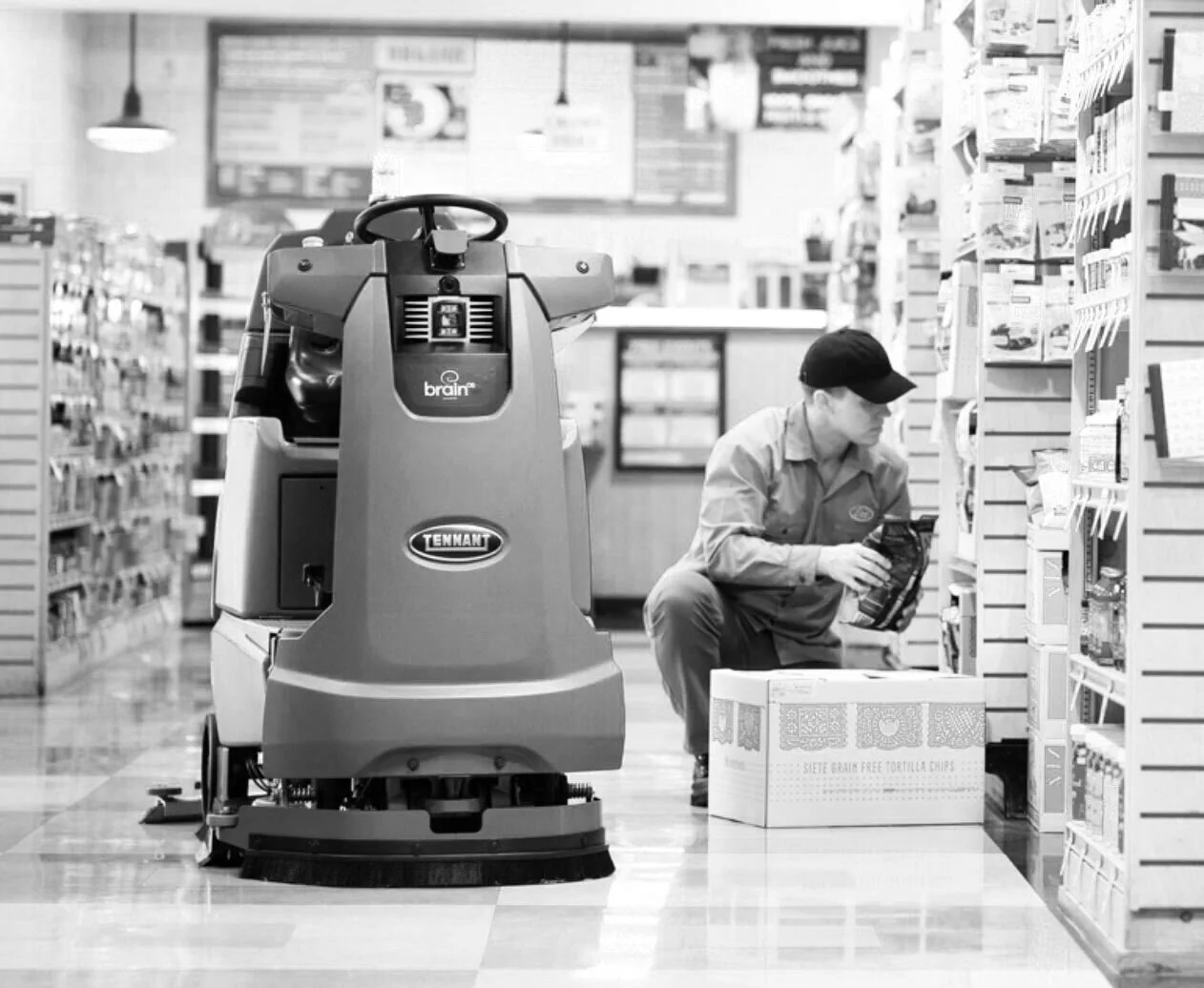
Brain Corp specializes in AI and autonomous navigation for robots, notably their flagship autonomous floor scrubber. This scrubber, powered by the BrainOS platform, is designed for use in various commercial settings, where it autonomously navigates and cleans floors.
The technology behind it allows for the understanding and adaptation to its environment, aiming to maintain cleanliness with minimal human intervention. This approach helps in keeping public spaces like big-box stores, shopping malls and airports clean, while also supporting staff by taking on routine cleaning tasks.
Brain Corp sought to enable remote access for operators and managers to their scrubber robot fleets, enhancing utilization and highlighting the robots' value.
My role: Product design lead throughout the v1 launch, from planning and requirements gathering to strategy, hypothesis definition, wireframing, visual design, content management and prototyping
Team: Cloud apps (5 product, design, engineering), tech services engineers, accounts management, OEM management
Duration: 4 months in 2021
Results
Significant improvement in route completion rate
Over 150% increase in machine utilization
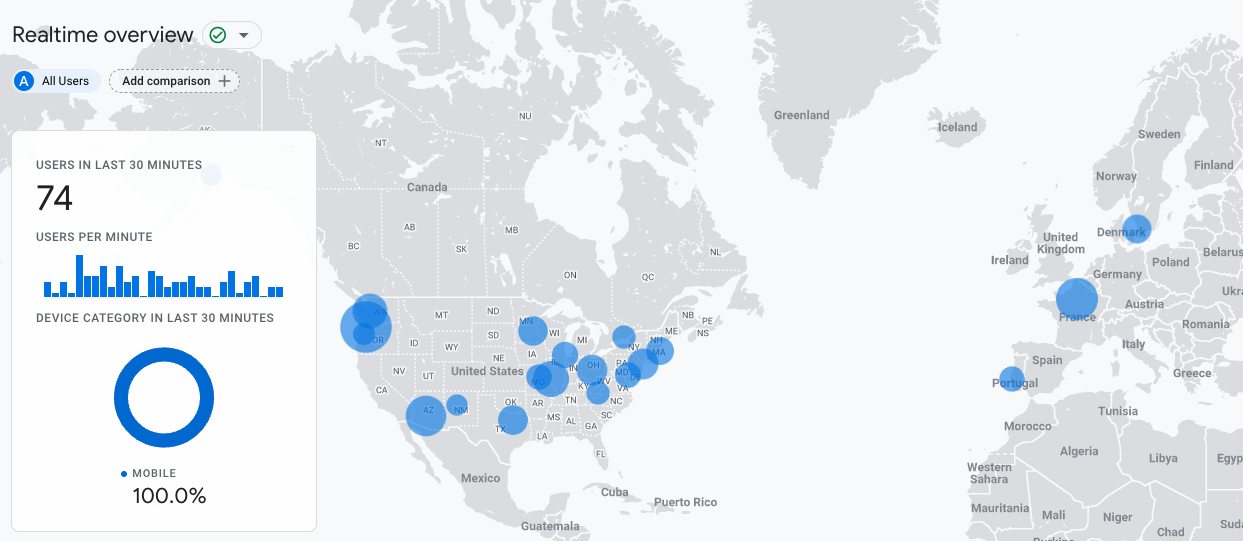
App was adopted in 6 countries
Featured product at CMS Berlin show
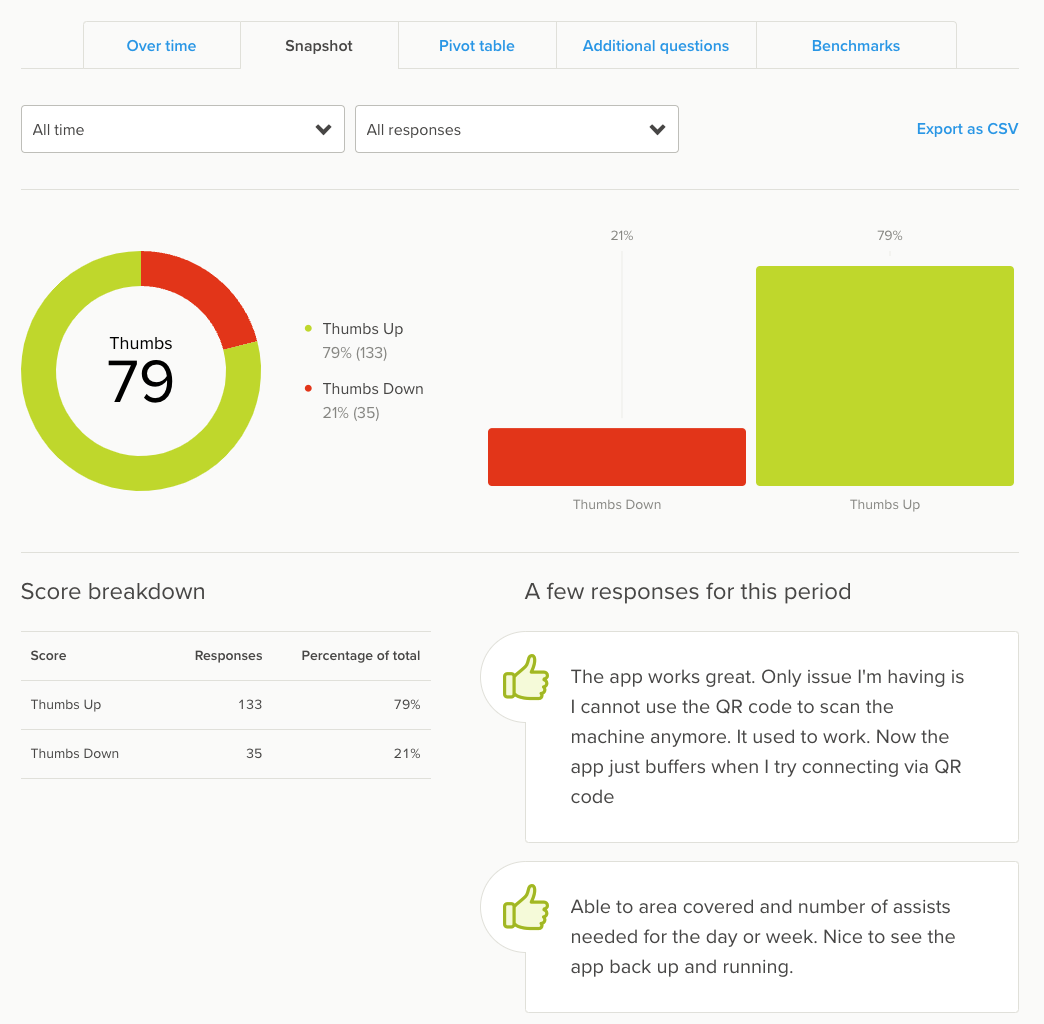
4.5 avg stars in the app stores (Apple and Google Play)
Problem
The company aimed to enhance corporate customer engagement, leverage insights for better decision-making, and boost the usage of the robotic machines to underscore their value. However, challenges emerged in achieving these objectives:
Robot operators faced difficulties receiving timely alerts from machines, efficiently clearing pathways for uninterrupted operation (e.g., moving restocked items blocking aisles), and meeting established performance targets.
Site managers sought more straightforward methods to monitor robot utilization, verify adherence to autonomous cleaning protocols, and provide comprehensive reports to corporate executives.
Objective
Deliver the company’s first mobile app to enhance machine utilization and operational efficiency, enabling customers and partners to easily track their Brain-powered machines' usage, cleaning coverage, and key performance metrics, thus driving informed decisions and reinforcing customer loyalty.
The mobile app will also be used a as sales/marketing enablement tool.
Brain Corp’s autonomous floor cleaner
BrainOS partnership with established OEMs
Uses sensors and AI to autonomously navigate spaces
Cleans various floor types without human supervision
Gathers data on usage, area cleaned and efficiency
Understanding the users and their pain points
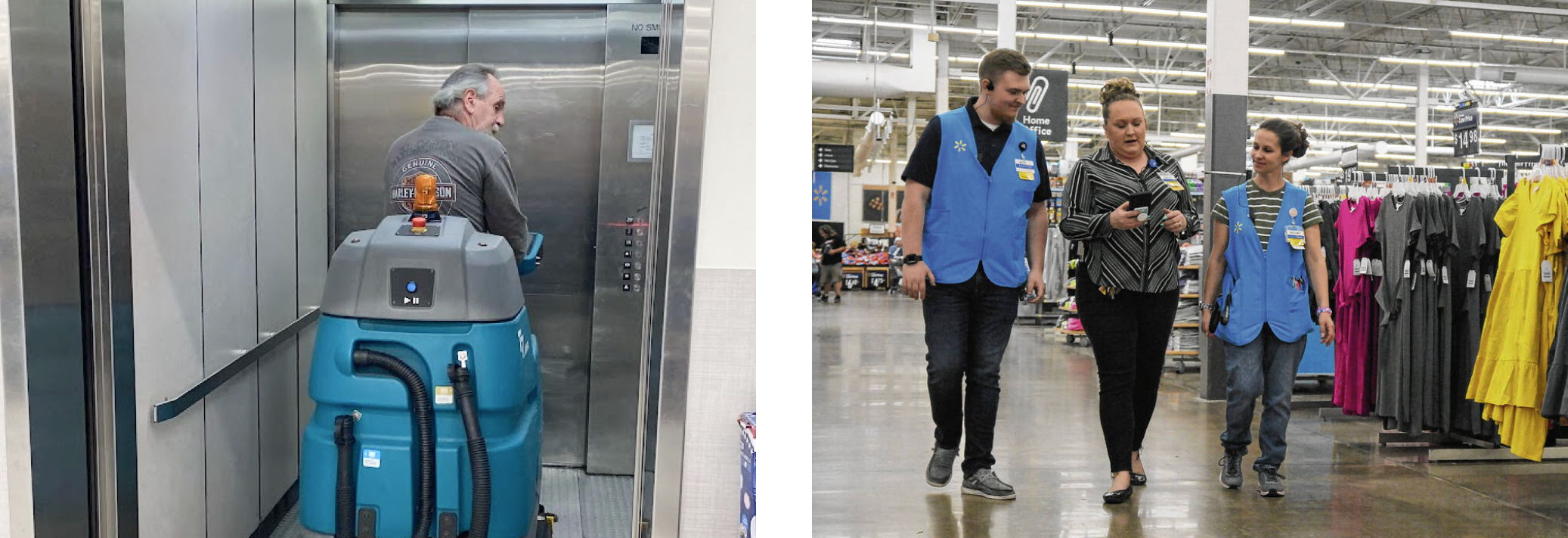
To gain a deeper understanding of our users, their environment and their challenges, I collaborated closely with the Director of Product Management for Cloud Applications. Together, we embarked on visits to various customer store/site locations, conducting contextual inquiries to observe firsthand how employees interacted with the autonomous cleaning machines.
These visits validated that there are primarily two distinct user groups at any given store or site:
Robot Operators: This group typically includes janitors or maintenance personnel responsible for the day-to-day operation and oversight of the autonomous machines. Their interaction with the technology is hands-on, dealing directly with machine alerts, operational challenges, and ensuring the robots perform their cleaning tasks effectively.
Site Managers: These individuals oversee the broader operational aspects of site maintenance, including the deployment and management of autonomous cleaning robots. Their focus is on tracking the usage and efficiency of the robots, ensuring compliance with cleaning protocols, and reporting performance metrics to corporate management.
Robot operator personas
Here are the Robot Operator personas developed in collaboration with the design team.
Prioritizing key data metrics for site and corporate managers
In our efforts to tailor the solution to the needs of both site and corporate managers, we focused on identifying and aligning on the data metrics that are most critical to their operations. Understanding what managers value allowed us to refine our approach and ensure the autonomous cleaning system delivers meaningful insights. The following data points emerged as priorities:
Autonomous cleaning compliance: Ensuring that cleaning protocols are strictly followed, maintaining a high standard of hygiene and safety, with an average target of 2 hours of autonomous cleaning per site.
Usage in autonomous mode: Tracking how frequently and effectively the robots are operating independently, highlighting the technology's value in reducing manual oversight. Average target is 80% in autonomous mode.
Coverage maps: Visualizing the areas cleaned by the robots, offering insights into cleaning efficiency and identifying any missed spots.
Daily cleaning per route: Monitoring the amount of cleaning accomplished on each designated route per day, ensuring consistency and comprehensiveness in maintenance efforts.
Visibility of where assists are happening: Identifying locations where human intervention is required, either to clear obstructions or to address areas the robots cannot autonomously navigate.
By focusing on these key metrics, we aimed to provide site and corporate managers with actionable insights, enabling them to make informed decisions about their cleaning operations and optimize the performance of the autonomous cleaning system.
Robot UI Screen Inventory
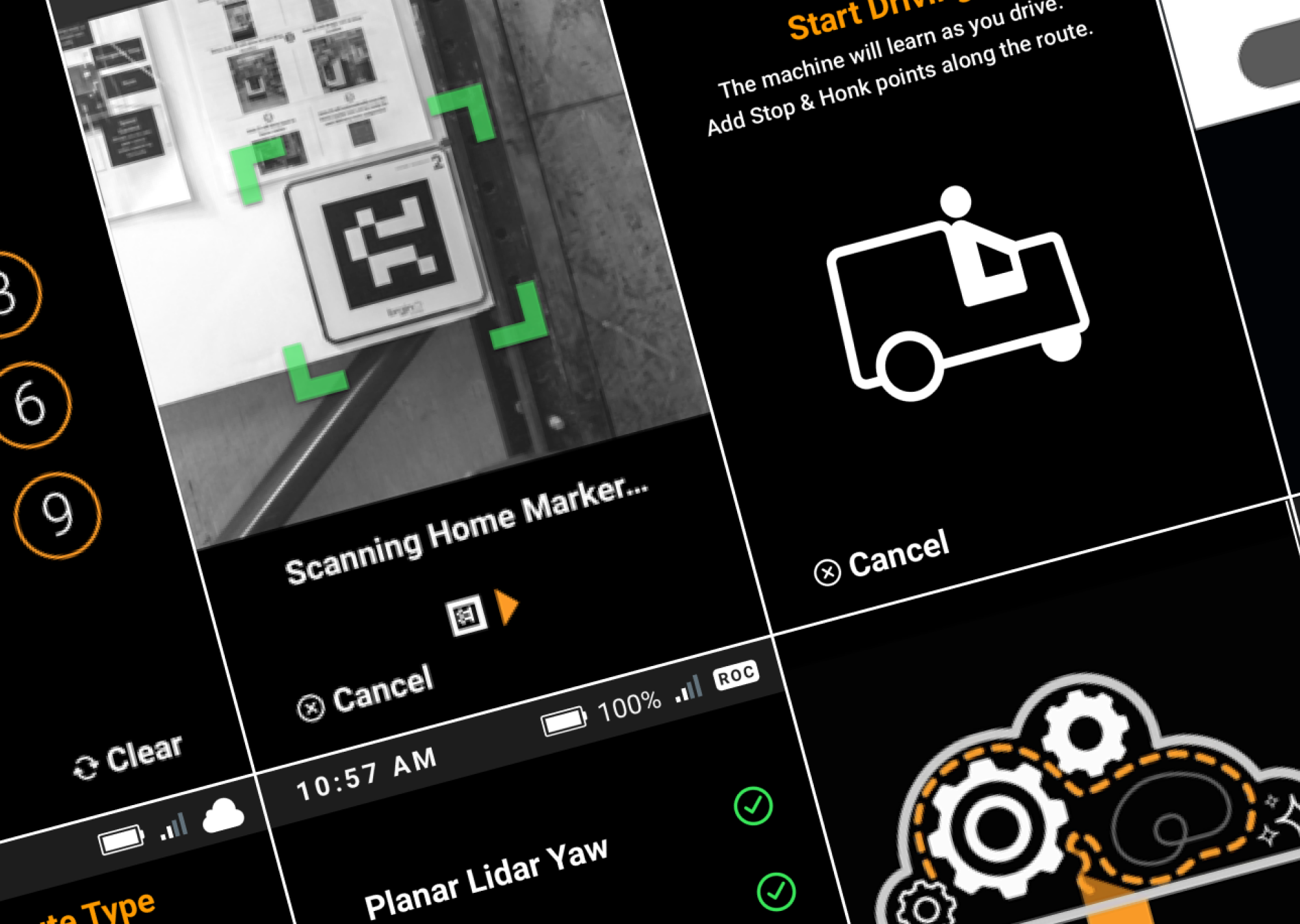
I created an inventory of the robot's display UI to ensure a cohesive experience with the mobile app. Our aim is to make the app look more elegant and modern, while keeping both interfaces in sync for effortless navigation and interaction.
Unified vision of success
Our team aligned on key success criteria for the app:
Beta feedback: Aimed for a 4+ stars rating from Beta testers, highlighting ease of use and satisfaction.
Engagement & adoption: Frequent use of the app and increased usage of the machines among store managers.
Performance optimization: Enable app users to monitor robot performance and optimize routes.
Assist event reduction: Reduce assist events' duration by 50%, which will dramatically improve cleaning efficiency.
Principles
These five principles helped the team streamline the product development for quick, safe delivery and fast iteration.
Safety first
Stay simple and lean
Reimagine over reinventing
Make mechanisms for learning and understanding obvious
Launch what matters
Primary goals for site level users
Robot operators
Receive notifications when machine triggers an assist (when the machine stops due to environment or machine issues and needs human help)
Understand how to improve performance to comply with headquarter’s target metrics
Go to machine’s location to clear an assist (e.g. blocked path when associate is restocking an aisle, crowds in the aisle, etc.)
Robot operators
Monitor and discover trends of usage and coverage
Ensure target autonomous usage compliance set by headquarters
Share with higher management and other store mgrs a snapshot report of data
Mapping out key activity workflows
App structure exploration
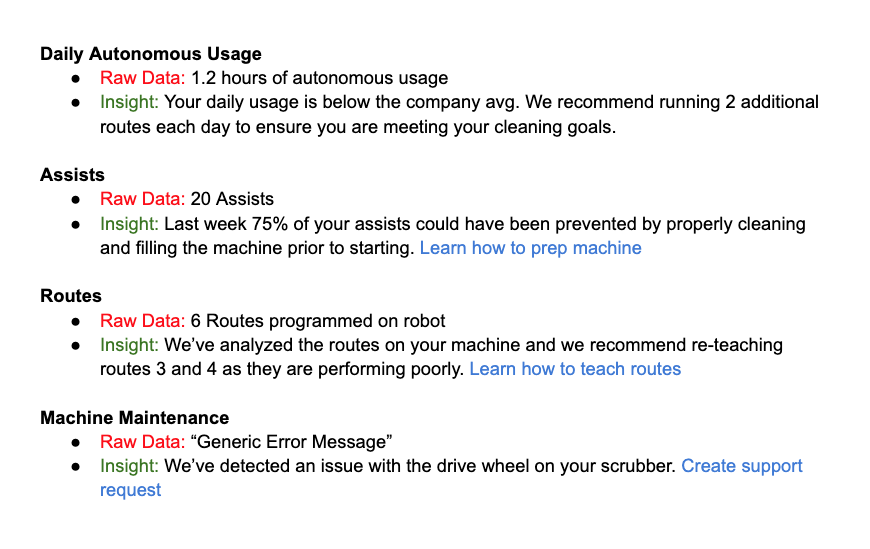
Early thinking of converting raw data into clear insights
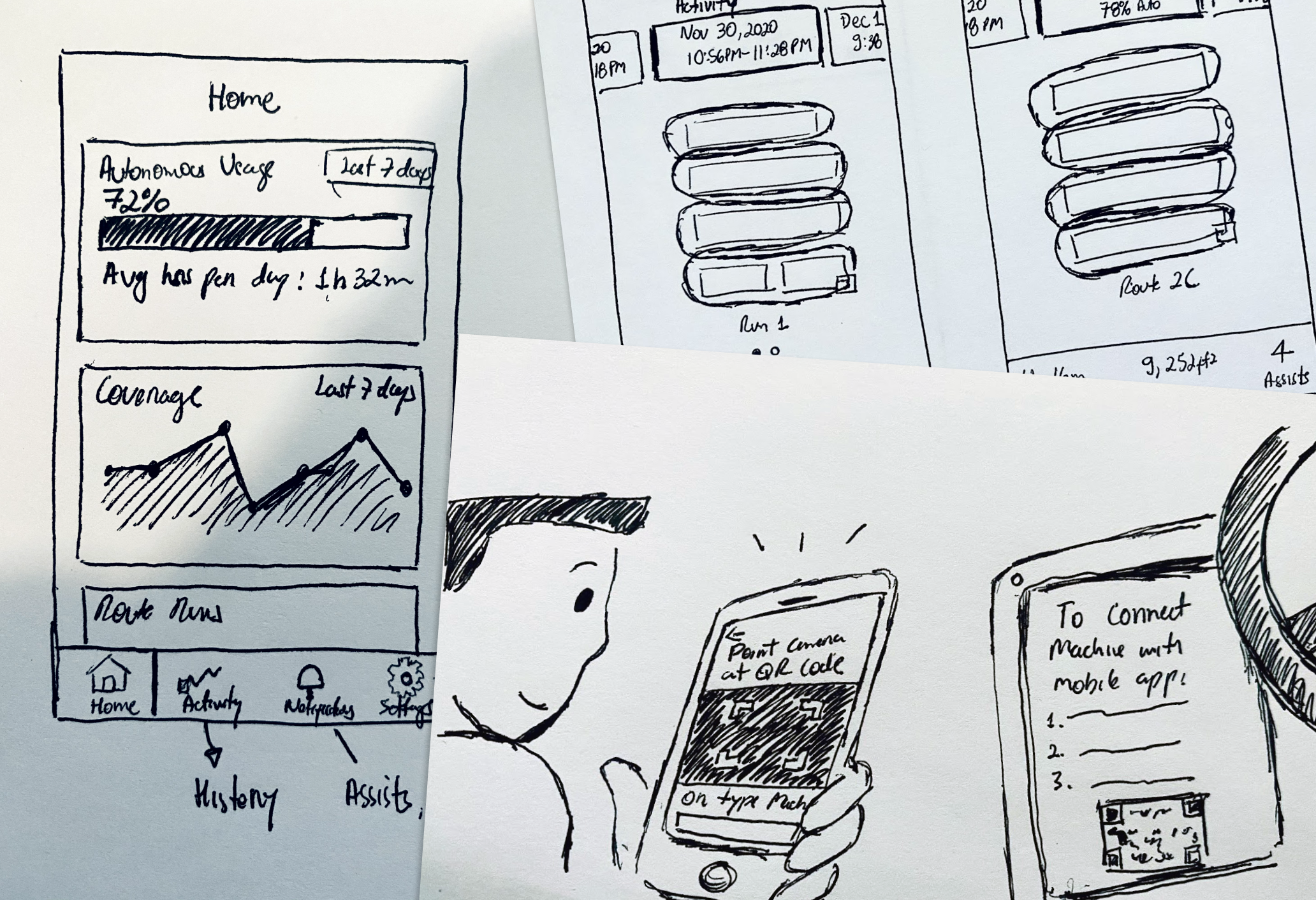
Exploring a variety of potential solutions
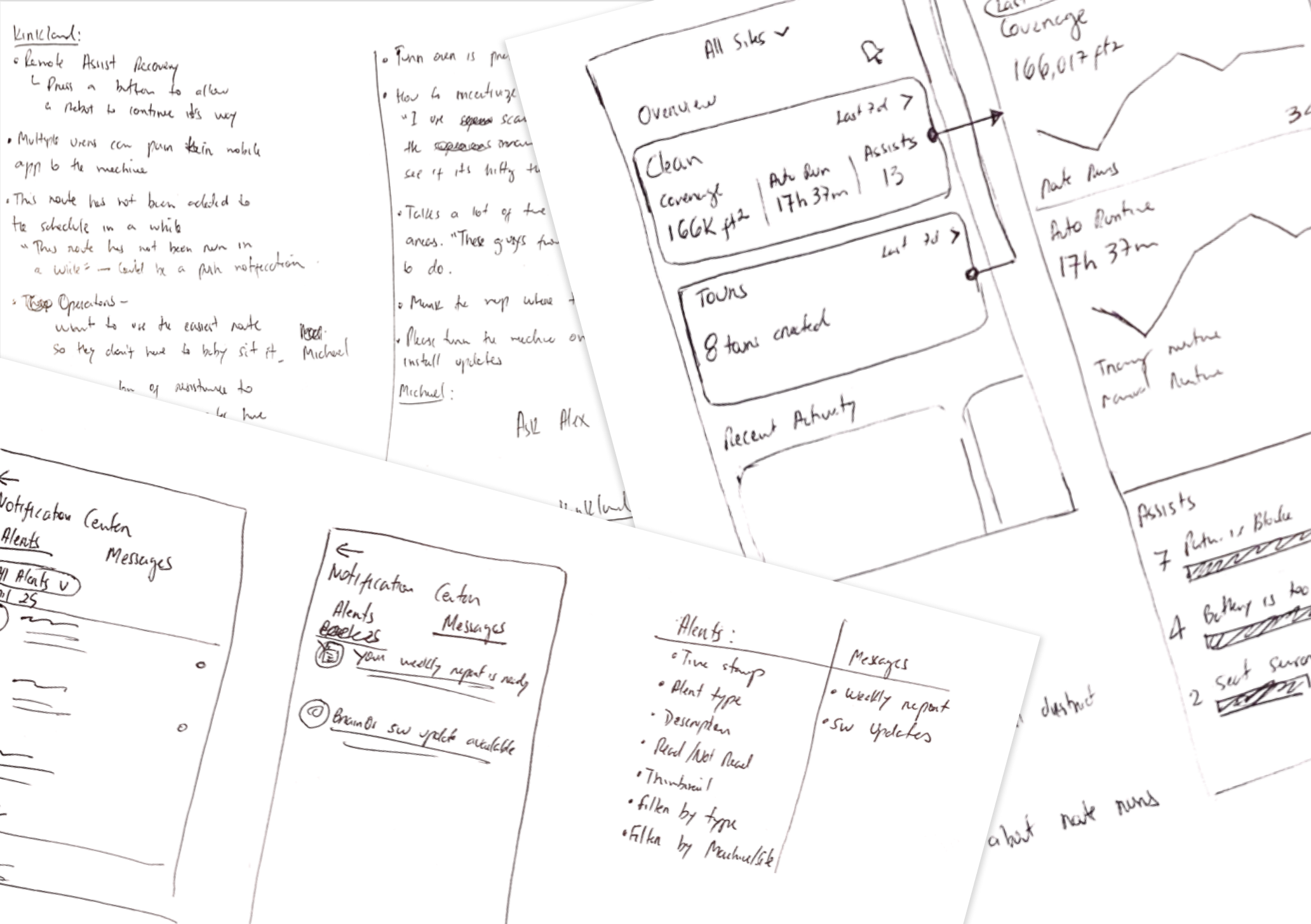
Rapid experiments with customers and design refinements
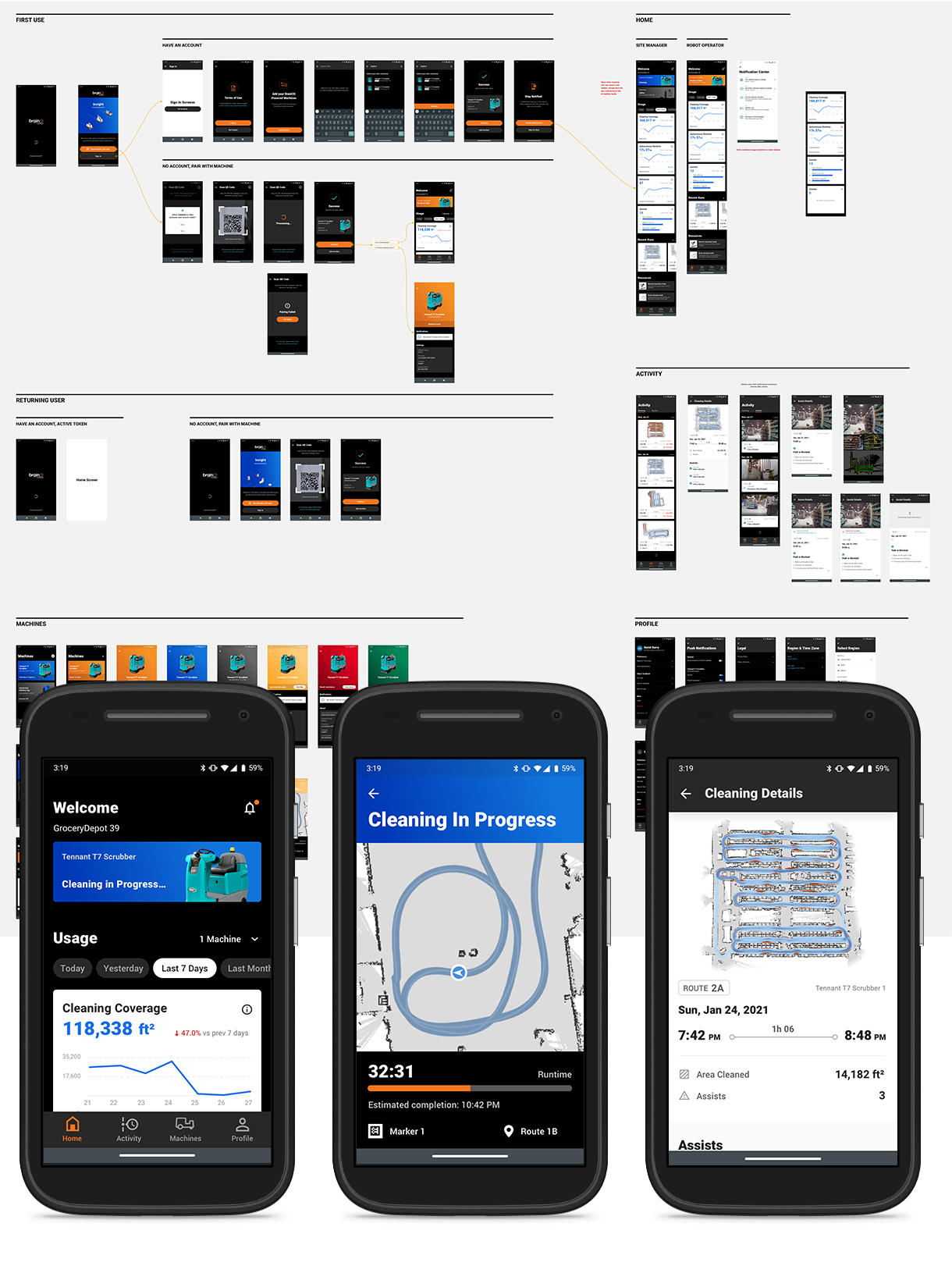
Final designs
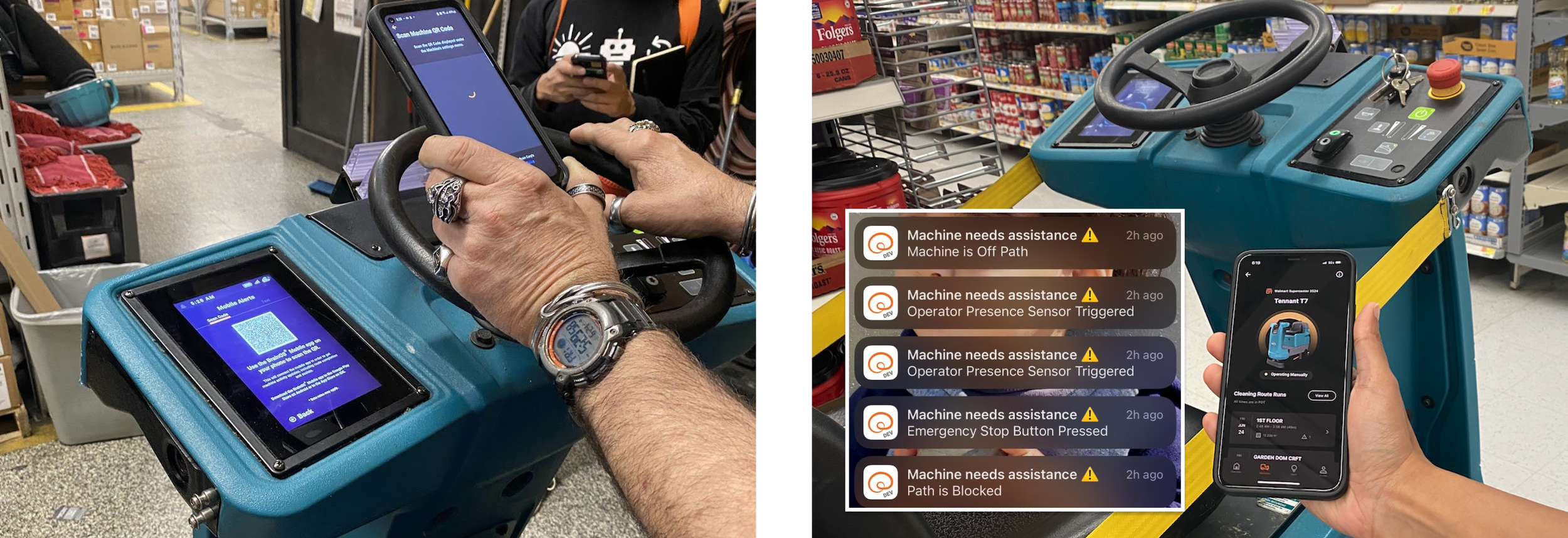
Pairing app with machine
Operators can initiate a “session” by pairing the mobile app with the robot , which typically remains paired for 12 hours.
Users with account (first use)
Managers can connect one or more machines using OAuth.
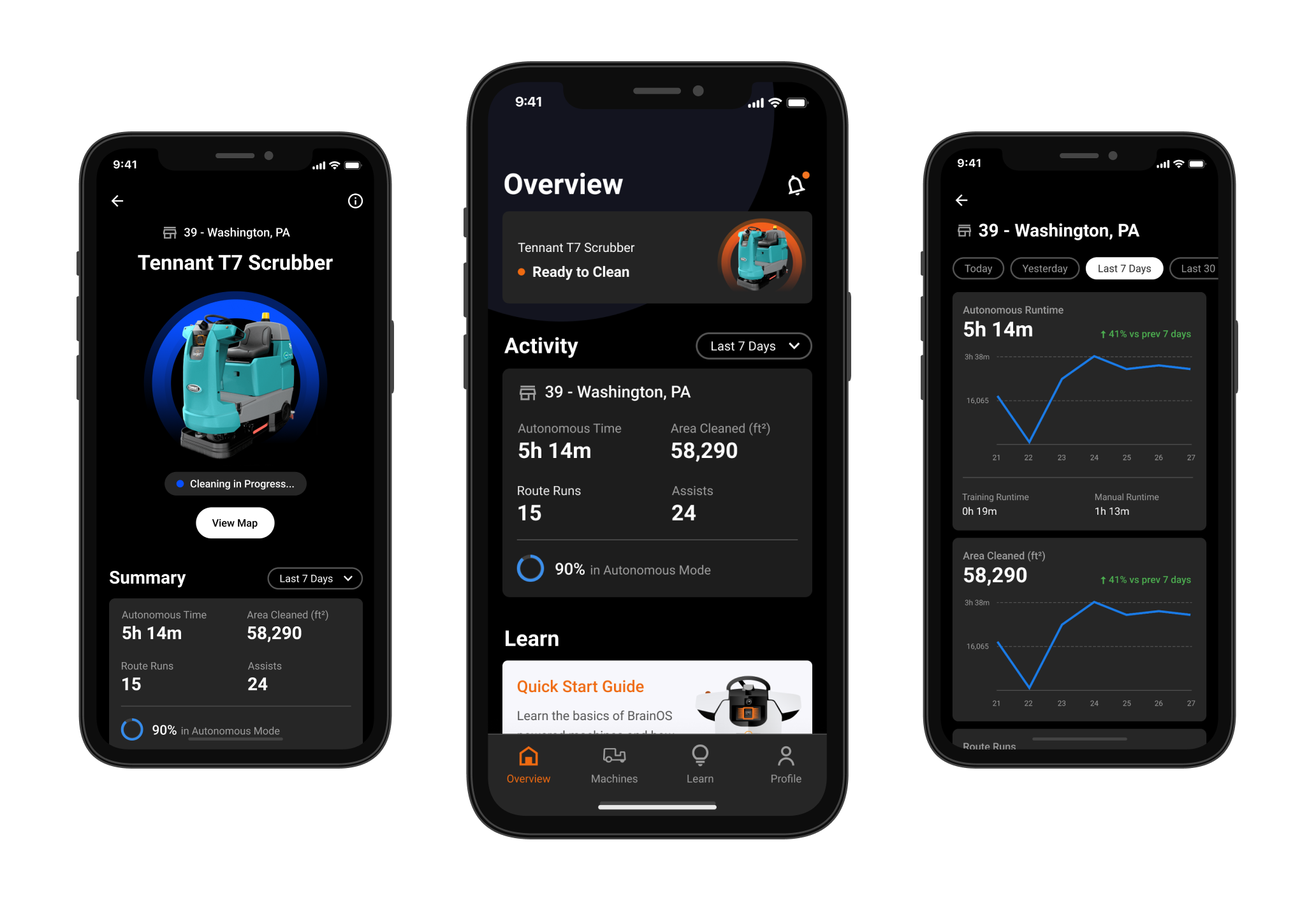
Overview tab
Shows managers and operators data and trends over time in order to inform decision making and optimize performance.
Machines tab
Enables operators and managers to view up to date information about their machine(s) such as current status, recent route runs and assists or available software updates. Push notifications deliver real-time notifications directly to an operator’s mobile device to notify of events such as the completion of a cleaning route(s) or when the machine requires assistance (assists).
Learn tab
Provides a host of materials to ensure operators can access interactive trainings for effectively utilizing their BrainOS-powered machines.
Design system - foundation
Results
Significant improvement in route completion rate
By allowing faster human responses to assists and informing route completion~ 150% increase in machine utilization
Using push notifications as external trigger and the display of weekly reportsApp was adopted in 6 countries
Customers in the U.S., Canada, Brazil, France, England, NetherlandsFeatured product at CMS Berlin show
CMS Berlin is the largest cleaning trade show in Europe4.5 avg stars in the app stores (Apple and Google Play)
With over 300 ratings at the time (as of Sep 2022)
Below is a ‘Snapshot’ report by Delighted (Qualtrics) as of June 2, 2022:
The app has been adopted by customers in 6 different countries. Google Analytics screenshot below shows real-time app usage in 4 countries.
You can check out BrainOS Mobile on the Apple Store and on Google Play.