BrainOS FleetOps
Revamping the portal for improved user engagement and scalability, emphasizing a modern, efficient, and captivating experience for customers, OEMs and internal users.
Enterprise SaaS • B2B • IoT • Data visualization • Analytics
Context
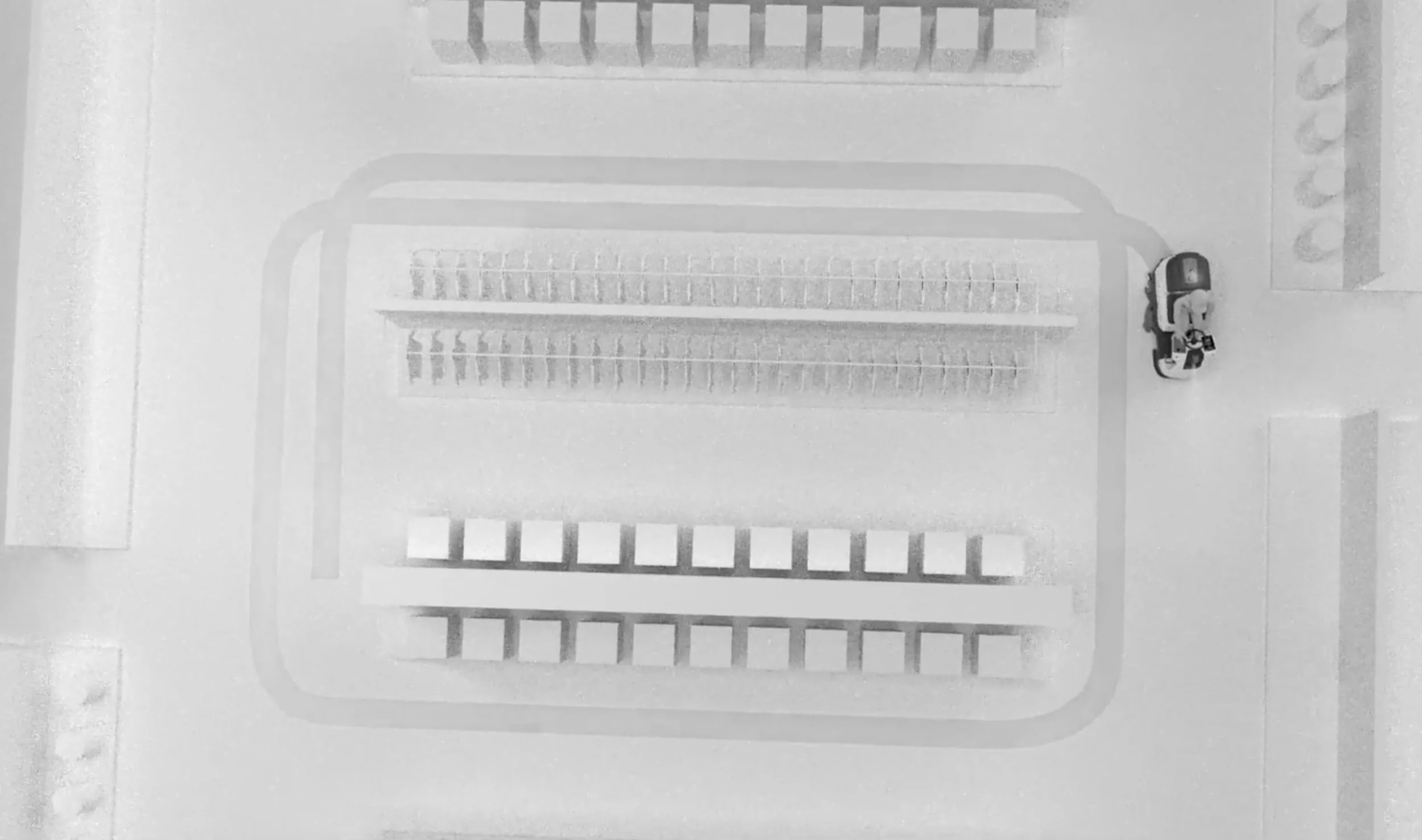
Brain Corp specializes in AI and autonomous navigation for robots, notably their flagship autonomous floor scrubber. This scrubber, powered by the BrainOS platform, is designed for use in various commercial settings, where it autonomously navigates and cleans floors.
The technology behind it allows for the understanding and adaptation to its environment, aiming to maintain cleanliness with minimal human intervention. This approach helps in keeping public spaces like big-box stores, shopping malls and airports clean, while also supporting staff by taking on routine cleaning tasks.
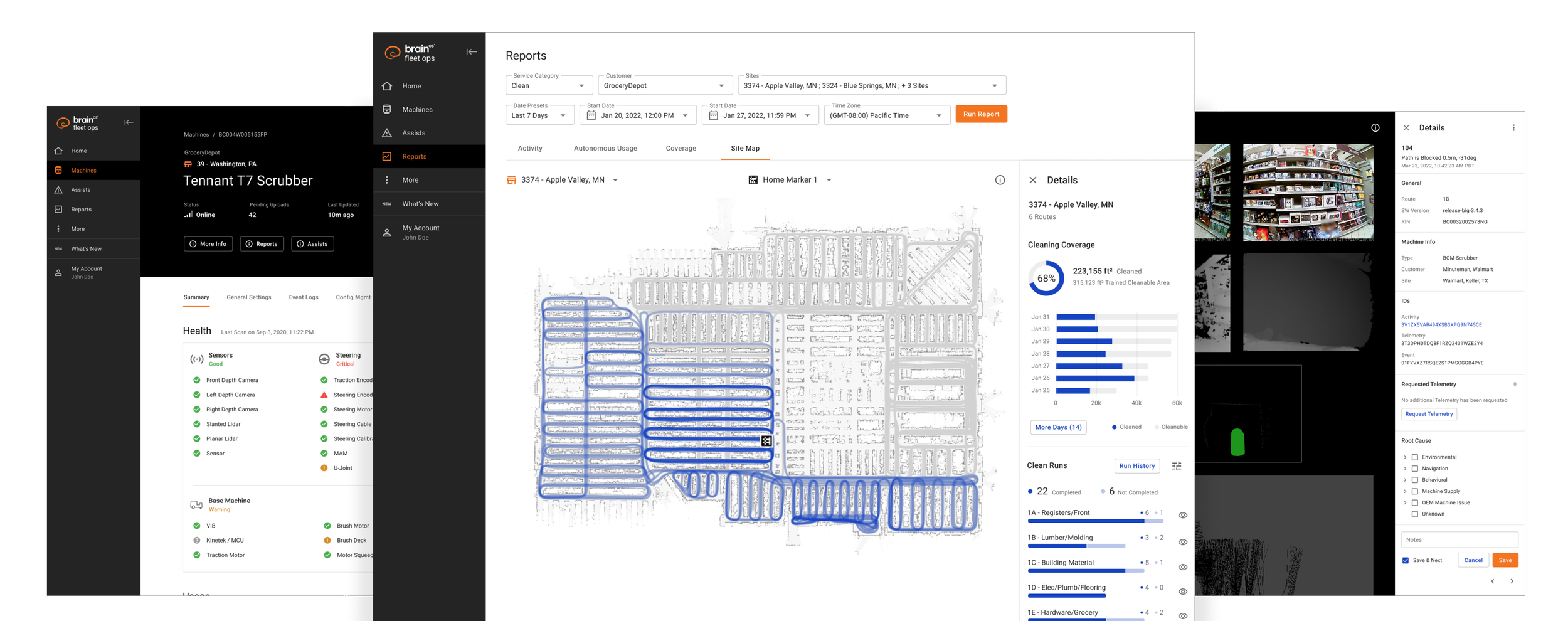
FleetOps portal was originally developed for internal and OEM partner use, proving fleet management, reporting and diagnostic tools. Brain Corp aimed to broaden access, making it more useful an easier to use for all customers.
My role: Product design lead, from planning and requirements gathering to research, strategy, hypothesis definition, wireframing, UI design and data visualization.
Team: Cloud apps (9 people in product, design and engineering), tech services engineers, accounts management, OEM management
Duration: 6 months in late 2021
Results
Achieved considerable operational optimization and cost savings with remote tool integration
Cleaning compliance in auto mode surged by over 200%
Regular portal usage rose to 70% among customers, with the remainder integrating via API
Support, technical service, and engineering teams increased efficiency threefold by consolidating from four tools to one
Assist event review times reduced from 6 to 2 minutes due to more efficient tools and processes
The project enhanced team velocity and collaboration, as evidenced by streamlined task management, better decision-making through intuitive design, and improved morale and communication, particularly benefiting engineers as portal users.
Problem
Internal Brain Corp staff needed a way to quickly identify and fix robot and environment issues remotely
Corporate managers and OEMs lacked effective tools to monitor robot fleet performance and ensure cleaning compliance with KPIs.
While the portal was functional, it was cumbersome, inefficient, cluttered, and visually outdated.
The key insight from customers:
“How do I know my facilities are getting cleaned?”
Before: raw data instead of actionable insights, cumbersome experience
Objective
Improve portal to scale and serve Brain’s customers better by delivering the information they care about in a simpler, clearer and more streamlined experience.
Understand value of using Brain’s autonomous machines
Meet cleaning target rate/compliance per site
Reduce deployment and onsite support costs
Make operational optimization easier
Standardize the front-end UI with Material UI React framework
Brain Corp’s autonomous floor cleaner
BrainOS partnership with established OEMs
Uses sensors and AI to autonomously navigate spaces
Cleans various floor types without human supervision
Gathers data on usage, area cleaned and efficiency
User groups
Internal users: Tech services engineers, OEM (Tenant) managers, machine learning scientists, robot analysts. They
OEMs: Tenant, Minuteman, Nilfisk staff responsible for the parnership with Brain
Customers: Big box retail, grocery chain, cleaning company executives, regional/district managers
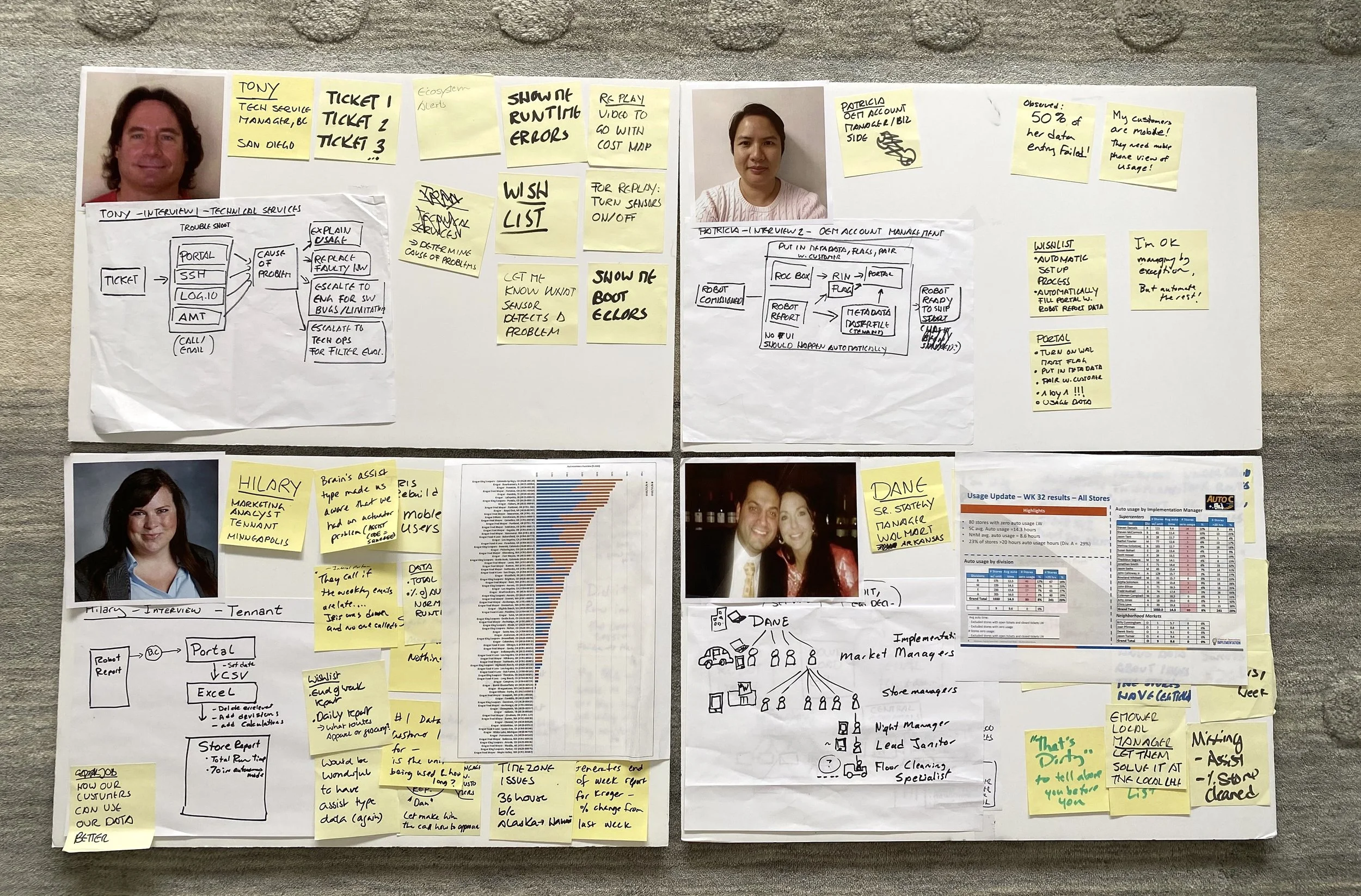
Prioritizing key data metrics for site and corporate managers
In our efforts to tailor the solution to the needs of both site and corporate managers, we focused on identifying and aligning on the data metrics that are most critical to their operations. Understanding what managers value allowed us to refine our approach and ensure the autonomous cleaning system delivers meaningful insights. The following data points emerged as priorities:
Autonomous cleaning compliance: Ensuring that cleaning protocols are strictly followed, maintaining a high standard of hygiene and safety, with an average target of 2 hours of autonomous cleaning per site.
Usage in autonomous mode: Tracking how frequently and effectively the robots are operating independently, highlighting the technology's value in reducing manual oversight. Average target is 80% in autonomous mode.
Coverage maps: Visualizing the areas cleaned by the robots, offering insights into cleaning efficiency and identifying any missed spots.
Daily cleaning per route: Monitoring the amount of cleaning accomplished on each designated route per day, ensuring consistency and comprehensiveness in maintenance efforts.
Visibility of where assists are happening: Identifying locations where human intervention is required, either to clear obstructions or to address areas the robots cannot autonomously navigate.
By focusing on these key metrics, we aimed to provide site and corporate managers with actionable insights, enabling them to make informed decisions about their cleaning operations and optimize the performance of the autonomous cleaning system.
Product vision
Empower customers to scale their Brain Corp-powered robots with ease, showcasing the capabilities of Brain's cloud services as a benchmark for excellence.
What success looks like?
Our team aligned on key success criteria for the portal:
40% or higher increase in monthly active users
75% or higher customer satisfaction score (CSAT)
Reduce support tickets to account managers and tech services
Optimize assist reviews to achieve greater accuracy in less time
Reduce the average onboarding time for new users by X%
Five design principles to provide guidance
Scalability: Design for scalable growth, supporting more users, user types and robotic applications
Clarity: Employ clear data visualization for quick understanding of complex information, streamlining robot performance, diagnostics, and analytics monitoring
Efficiency and speed: Streamline workflows to reduce clicks and screens for faster, more efficient task completion
Feedback and responsiveness: Offer real-time feedback for user actions, clarifying processing statuses and errors
Accessibility: Ensure the web portal is accessible to everyone, incorporating keyboard navigation and following accessibility standards for diverse abilities.
Development efficiency: Harness the Material UI React framework for faster development, consistent user interfaces, customizable components, accessible design, and community support
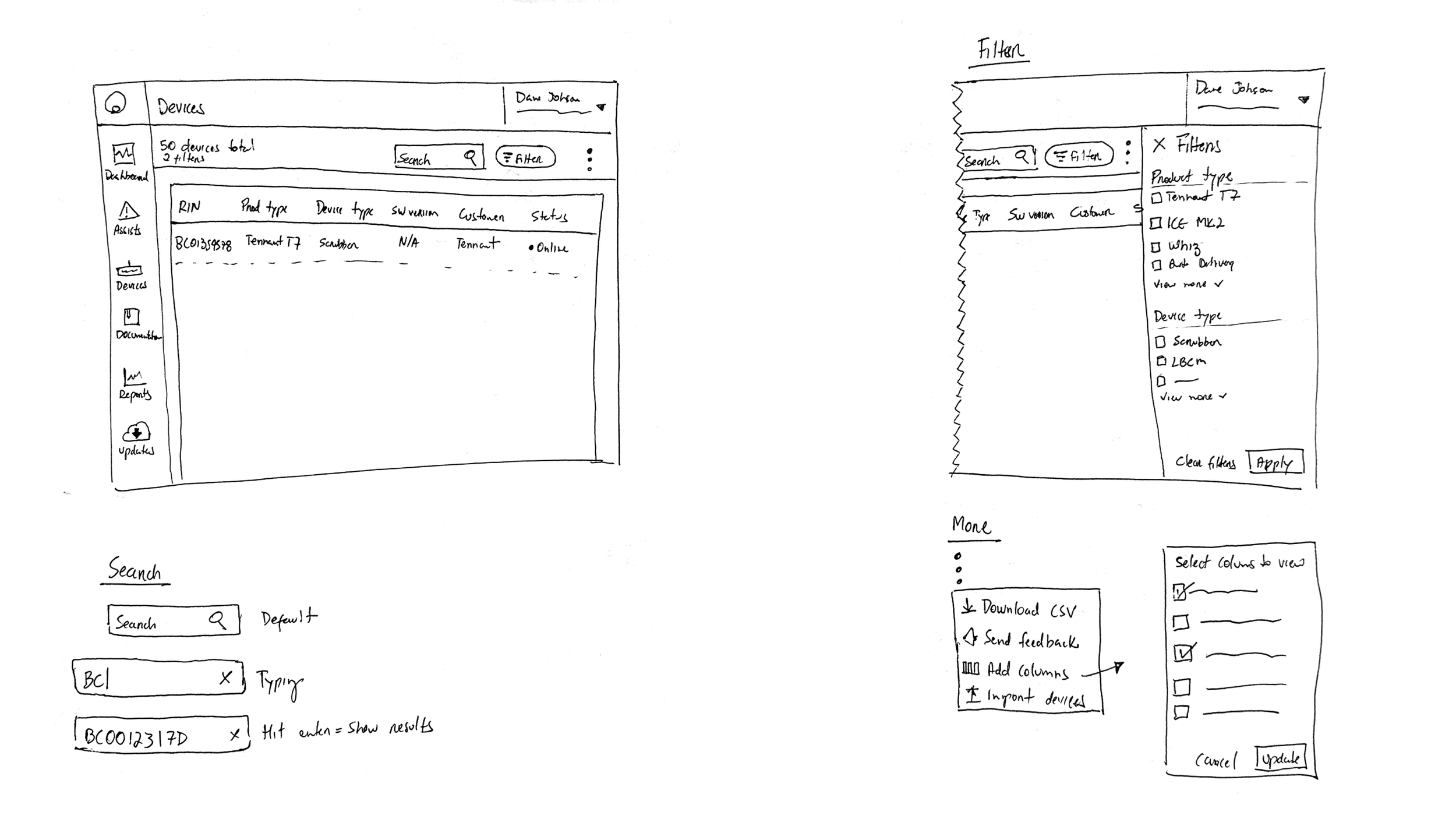
Exploring and testing a variety of potential solutions
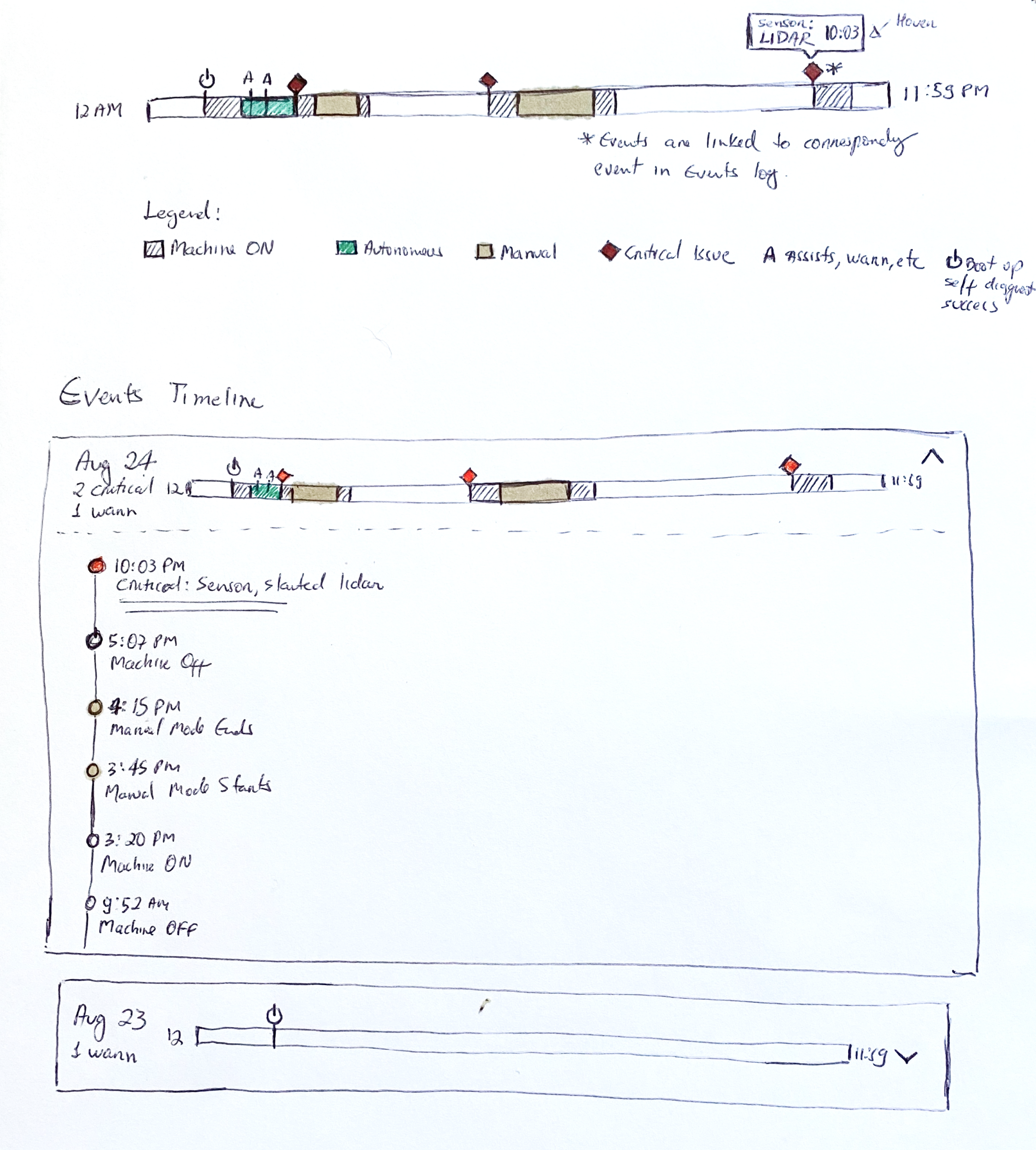

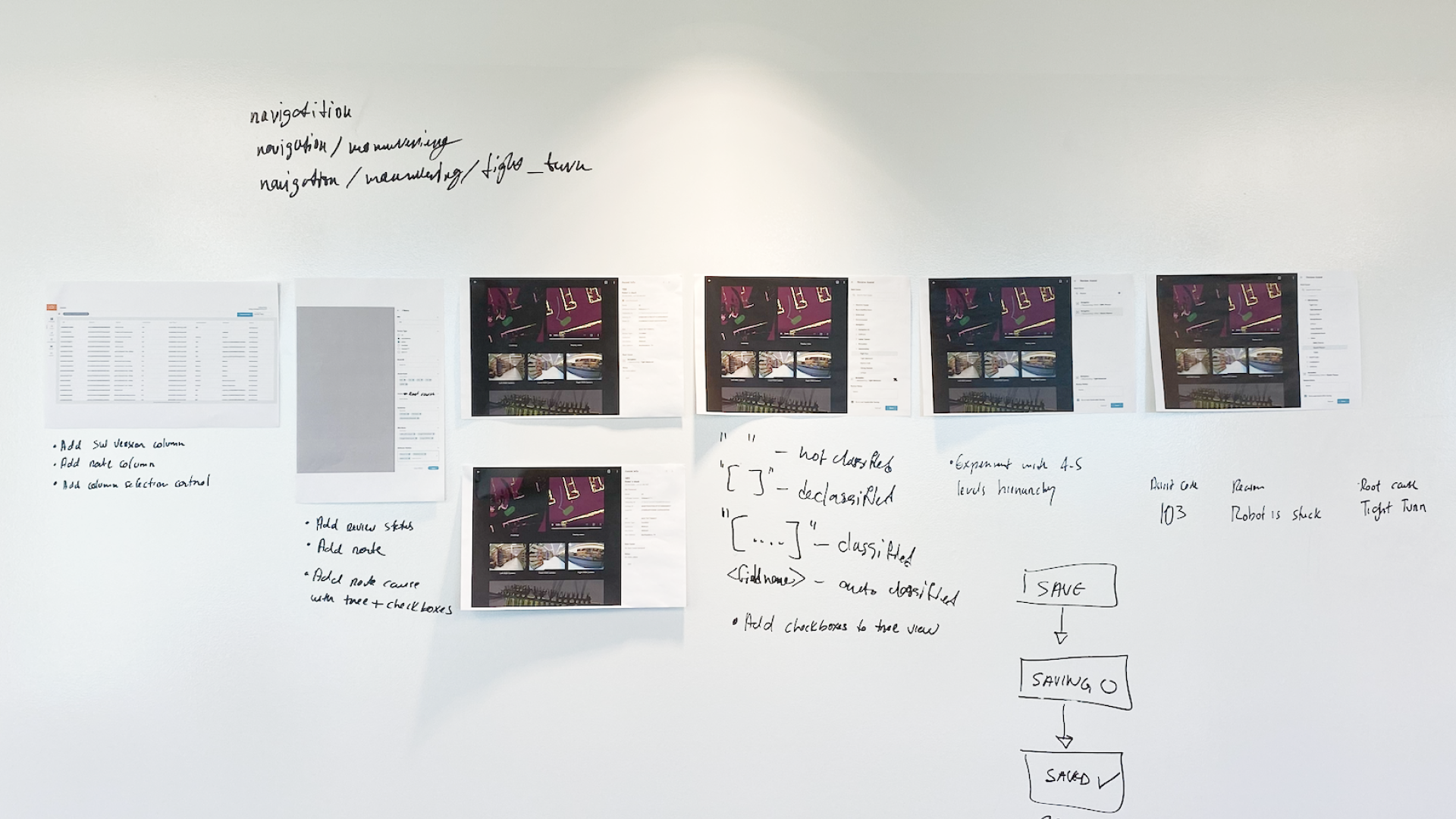
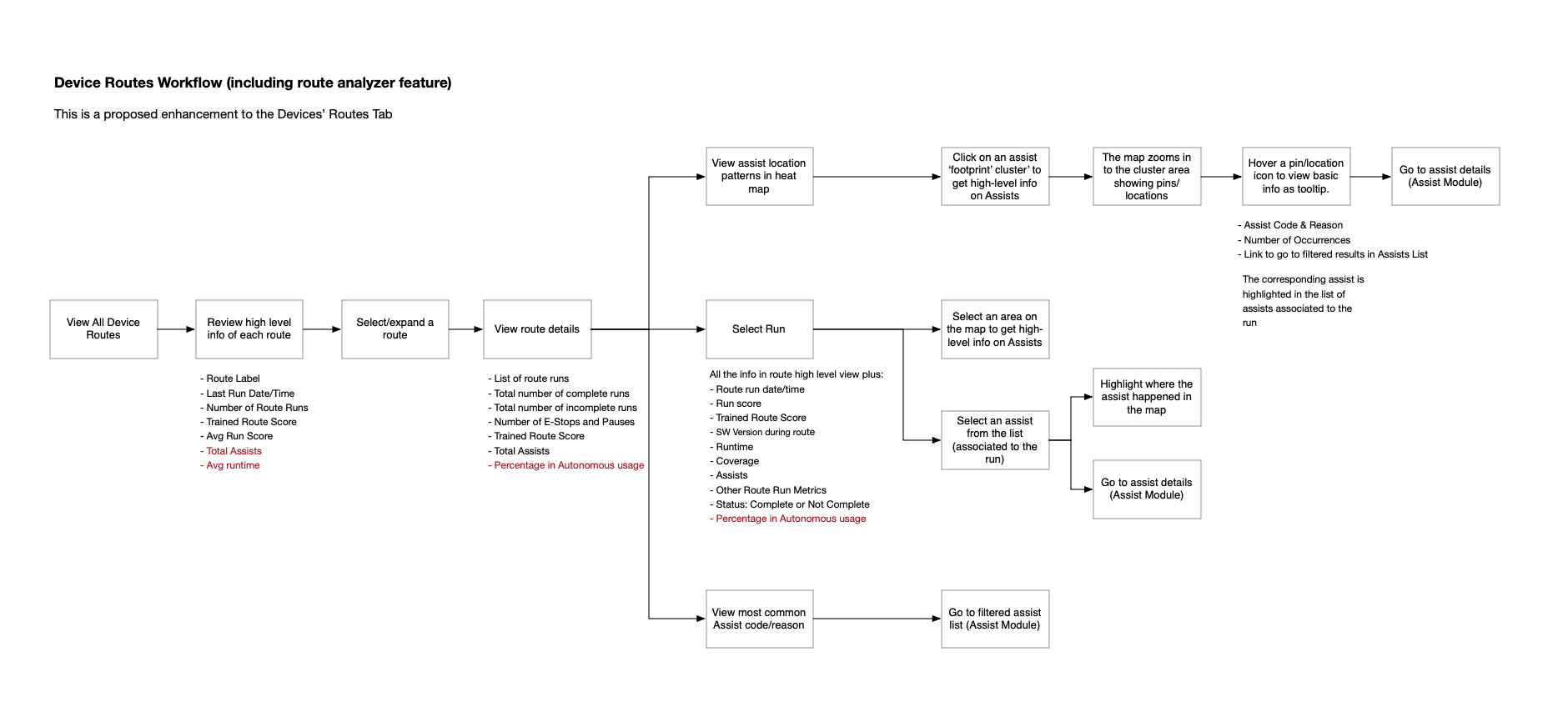
Final designs
Assists review module (internal tool)
This significant upgrade to our toolkit enhances the review and troubleshooting of 'assist' events for specific robots. The revamped module streamlines what was once a cumbersome process, dramatically improving efficiency.
Before the rollout, reviewing a single 'assist' event averaged 6 minutes, involving multiple tools and commands. Now, the process is cut down to an average of just 2 minutes.
Remote route analyzer (internal tool)
This significant upgrade to our toolkit enhances the review and troubleshooting of 'assist' events for specific robots. The revamped module streamlines what was once a cumbersome process, dramatically improving efficiency:
Before the rollout, reviewing a single 'assist' event averaged 6 minutes, involving multiple tools and commands. Now, the process is cut down to an average of just 2 minutes.
Site maps report
This new report offers facility managers vital insights into site cleaning operations and proof of work through advanced visual site mapping. This report delivers a clear, real-time visual representation of cleaned areas versus those needing attention, enabling more efficient route planning, schedule optimization, and identification of focus areas.
Autonomous usage report
Revamped report, tracking how frequently and effectively the robots are operating independently, highlighting the technology's value in reducing manual oversight. Customers’ average target is to operate in 80% or above in autonomous mode (vs manual or training route mode)
Machine details (customer facing)
Redesigned to make it easier and faster to find all the information presented in the page and the ability to find contextually relevant information in other modules.
Results
Achieved considerable operational optimization and cost savings with remote tool integration
Cleaning compliance in auto mode surged by over 200%
Regular portal usage rose to 70% among customers, with the remainder integrating via API
Support, technical service, and engineering teams increased efficiency threefold by consolidating from four tools to one
Assist event review times reduced from 6 to 2 minutes due to more efficient tools and processes
The project enhanced team velocity and collaboration, as evidenced by streamlined task management, better decision-making through intuitive design, and improved morale and communication, particularly benefiting engineers as portal users.